Search This Blog

Saturday, July 30, 2011

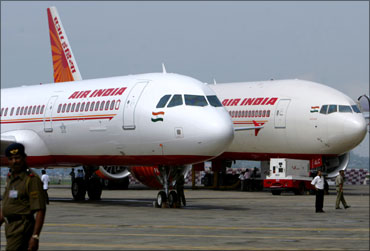
SILVER & PLATINUM PASS BY AIR INDIA

The salient features of the Travel Pass are as under:

The Pass is being offered in two variants:

  1)Silver Pass for travel in Economy class
  2)Platinum Pass for travel in Executive class

Valid for unlimited travel on the Domestic network within Ten Days from the date of commencement of Journey. Travel to be completed on or before 25th September, 2011.

Fare:

Silver Pass:      INR 30,000(all inclusive)
Platinum Pass: INR 50,000 (all inclusive)

Validity for sale: With effect from 15th June, 2011 upto 15th Sept. 2011.

Discounts : No discount permitted.

Upsell : If seats are not available in the required RBD up sell would be permitted as under:

Silver Pass : Rs. 500 per coupon for every next higher RBD in Economy class.

Platinum Pass : Rs. 1000 per coupon for the next higher RBD.

Sale Restriction : Both Silver and Platinum Pass will be available for sale within India only.

Combination: Not combinable with any other Fare type or discount.

Documentation: Photo Identity card to be carried for verification while traveling.

Revalidation & Refund

Penalty for Revalidation/Re-issuance “NIL”

No refund is permissible after the passenger has commenced the first leg of the Journey.

A Refund fee of Rs. 1500 and Rs.2500 for Silver and Platinum Pass respectively applicable for totally un-utilized Pass presented for refund.

Friday, July 29, 2011

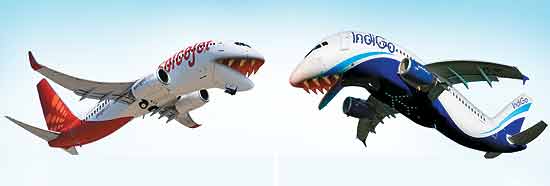
SpiceJet plane hits parked IndiGo

An IndiGo Airbus 320 was damaged after a SpiceJet Boeing 737 hit its fuselage while taxiing out from the parking bay of the Indira Gandhi International Airport early Thursday.
There were no passengers on board both aircraft at the time of the incident. A probe has been ordered to pin-point responsibility.
The incident took place around 2 am when a SpiceJet aircraft, while taxiing out from Bay 15, struck the IndiGo plane parked at Bay 1.
The right side of the IndiGo aircraft’s fuselage was hit, resulting in a structural damage of the flight recorder access door area, a spokesperson for IndiGo said.
SpiceJet’s Boeing 737, which was being taken out for maintenance, also suffered damage. Sources said the aircraft’s winglet was damaged.
A spokesperson for SpiceJet said investigations were on in the incident in which “minor damage was caused to the aircraft”.

Wednesday, May 11, 2011

Pre-Monsoon Heating & Monsoon Rainfall

This is the report from Indian Met Department (IMD) showing Suppressed Surface Heating over northwestern parts of the Country and the ensuing Monsoon Rainfall. The full report can be found on the IMD website. Click on the Title to view Report.

Tuesday, May 10, 2011

Jet may phase out JetLite, bring operations under Jet Konnect

New Delhi: Jet Airways plans to bring all its low-fare operations under the Jet Konnect brand and phase out the JetLite brand completely.
The country’s largest airline by passengers carried believes that this move will simplify operations and remove the current confusion over two similar low-fare brands — Jet Konnect and JetLite.
Though no timeline is available for this transition, sources in the aviation industry and some officials of Jet confirmed that internal discussions have been held on phasing out JetLite.
These talks have gained momentum after the recent Bombay High Court order, which ended a messy legal battle between Jet and Sahara India Commercial Corporation.
The battle has its origins in Jet’s April 2007 purchase of Sahara Airlines — which operated Air Sahara — and later rebranding it to JetLite.
This court order will now enable Jet to carry out several business operations, including developing land, selling and leasing back of planes and rebranding JetLite, all of which had come under a cloud because of the litigation.
09/05/11 Sindhu Bhattacharya/Daily News & Analysis

Saturday, May 07, 2011

Jet, Indigo, Kingfisher and others worried on Air India fare cut

Mumbai: National carrier Air India's move to lower fares by up to 20% on certain routes since January this year to prop up its falling market share is making other airlines see red as they face the prospect of taking a hit on their profits.
Airlines are worried that the national carrier's dash for market share has come at a time when oil prices have risen to record highs due to the Libyan crisis, raising their operational costs as much as 50% in some cases.
" Air India is offering all their seats at prices that are lying at the bottom of the yield bucket. They are reducing fares by as much as.`1,000 and competing with us by dropping fares, especially on the Delhi-Mumbai routes," said the CEO of a low-cost airline who did not wish to be identified. "A drop of .`100 in yield will bleed airlines by .`3 crore."
Despite having the largest fleet, Air India was recently overtaken by low-cost airline IndiGo in terms of market share. The national carrier has a market share of 15%. It has long lagged behind Jet and Kingfisher , the two large sector airlines. Air India's move has had some impact in January-March 2011 quarter, say analysts.
"Air India has dropped fares in the last quarter by 20%-30%. This forced other airlines to follow suit. With fuel costs up by more than 40%, this drop in fares by Air India has become a game changer for the fourth quarter of the last financial year," said Kapil Kaul , CEO, (Indian sub-continent & Middle East), CAPA.
Air India defends the strategy by saying that its market share has gone up and it has become competitive.

Sunday, May 01, 2011

Eyewitnesses in Bhutan say they saw chopper trying to land

Official sources in the Arunachal Pradesh Government have said they are attempting to get in touch with some witnesses in Bhutan who have claimed seeing a chopper descending in their area, and then taking off in a north easterly direction.
The statement came as the search operation for missing Arunachal Pradesh Chief Minister Dorjee Khandu and four others was called off on Sunday due to inclement weather and receding light. The Government of India is trying to get in touch with the Bhutanese locals.
Meanwhile, the Indian Space Research Organisation (ISRO) has released images of the area where its two satellites were used to try to find the missing chopper.
The chief minister's principal secretary, Yeshi Tsering, has also revealed that he received a phone call from a person who told him that the chief minister was safe in Bhutan. He suggested that it could have been Khandu. But this is yet to be corroborated and confirmed.
Pawan Hans has defended itself by saying that the missing helicopter was four-months old and in perfect condition technically.
In a statement, Pawan Hans said VIPs had used the chopper previously without experiencing any problem.
The defence of the chopper came as Chief Minister Khandu's adviser Kiren Rijiju said there was need to take a strong view on the maintenance capabilities of Pawan Hans.
He said the maintenance of choppers by the organization was erratic. He also said that as of now there was no official confirmation about the chopper landing in Bhutan.
The missing Pawan Hans AS350 B-3 helicopter that took off from Tawang at 9.50 a.m. on Saturday lost communication with the ground after it flew past the Sela Pass along the Chinese border about 20 to 25 minutes later. The helicopter was scheduled to land in Itanagar at 11.30 a.m. on Saturday.
On Saturday, several media reports quoted Arunachal Pradesh Governor General (retired) J J Singh and Chief Secretary Bam as saying that the helicopter had landed safely somewhere in eastern Bhutan adjoining Tawang district and that the same helicopter was flying back to Guwahati with the chief minister on board.
Bhutan, however, later denied that any Indian helicopter had landed in its territory, but said a search operation was launched following request from New Delhi.
Apart from Khandu, the people on board included crew members Captain J S Babbar and Captain K S Malick, Khandu's security officer Yeshi Choddak and Yeshi Lamu, sister of Tawang legislator Tsewang Dhondup.

No trace of Arunachal CM, ISRO roped in to trace chopper

New Delhi: Government on Saturday night alerted the Department of Space and ISRO for help in locating the whereabouts of the missing helicopter carrying Arunachal Pradesh chief minister Dorjee Khandu and four others.
Union Home Secretary G K Pillai said that Indian satellites have made two passes over the probable area from where the Pawan Hans helicopter went missing 20 minutes after takeoff from Tawang in Arunachal Pradesh but has not picked up any signals.
He said Pawan Hans helicopter carries a a location transponder that can communicate at 406 MHz frequency in the event of any emergency or it could also be manually operated.
The chopper was last in communication with the base when it was overflying Sela Pass, 20 minutes after taking off from Tawang, and all communication was lost after that.
There was confusion in the afternoon with claims made by Governor Gen (retd) J J Singh first and then by the chief minister's office and defence spokesperson that the chief minister had landed safely in a place called Daporijo in Upper Subansiri district. The CM's office said the helicopter had landed in a place in Bhutan.
The five on board included crew members Captain J S Babbar and Captain K S Malick, Khandu's security officer Yeshi Choddak and Yeshi Lamu, sister of Tawang MLA Tsewang Dhondup.

Monday, March 14, 2011

Who's flying you? - Case of Garima Passi

TIMES NOW has uncovered a fresh scam in the pilot scam. 24 year old Garima Passi is allowed to fly SpiceJet despite an objection from a training school. The American training school recommended cancelling Passi's training. Sabeena Airline training Centre observed Passi had 'fear of aircrafts'.

TIMES NOW accessed the training school's report. Eliza Wade, ACI, Sabeena Training Centre, said Passi made a hard landing and caused damage and that the pilot lacks confidence as she has fear of aircrafts. Eliza said the pilot lacks basic aircraft control and she does not complete the gap between knowing and applying.

Even as two people have been arrested for holding fake pilot licences, sources within the Crime Branch investigating the case have told TIMES NOW that a scam of this scale could not have been possible without the connivance of DGCA officials.

TIMES NOW asks:

1. Is SpiceJet aware of her training records as per Sabeena Training Academy's letters?

2. How can someone who's training was suspended be cleared by the Uttrakhand training school?

3. Is it a coincidence that her father is Director of Air Safety Northern Command?

4. How is no one in the ministry aware of the Garima Passi case?

2 arrested pilots paid Rs 10 lakh for forged marksheet: Police

Two pilots arrested in the Capital for obtaining flying licence by allegedly forging marksheets are believed to have paid touts Rs 10-12 lakh each, Police said, adding investigations were underway to know the identity of these middlemen.

Police arrested Parminder Kaur Gulati (38) of Indigo and Jitender Kishen Verma (46) of Air India in the last one week and are hot on the trail of two more pilots who are absconding in the wake of the fake pilot scare.

The investigating agency is now on the look out for other pilots who allegedly forged marksheets to secure a pilots license.

Sunday, March 13, 2011

FAKE Pilots Case

New Delhi: Pilots with fake and forged licences could be flying commercial aircraft in India. A CNN-IBN investigation has found that at least 10 pilots have bribed their way through rigorous aviation tests to become commanders in some of the top airlines in India.
The case of Indigo pilot Parminder Kaur Gulati, who was arrested on Wednesday by Delhi Police for obtaining a pilot's license on alleged forged documents, is just the tip of an iceberg. The DGCA is now investigating over 1700 pilots who may have paid their way to pass the test to command a flight
The Airlines Transport Pilot Licence (ALTP) is every pilot’s dream. The ALTP makes the person the pilot-in-command and also doubles the salary.
But getting the licence is not easy. The pilot has to log over 1500 flying hours and pass three tests in Air Navigation, Radio Aids and Instruments and Aviation Meteorology. They also face an interview.
Such is the rush that many pilots are willing to pay for it. The arrest of Parminder has now opened a can of worms. CNN-IBN has spoken to many pilots to reveal the shocking story of some of the pilots who could be flying you around have fake licences
Four senior pilots of Air India, Kingfisher, Jet Airways and Indigo admitted that the rates were upwards of Rs 7 lakh to pass the commander test and could go upto Rs 25 lakh. The deals are brokered by touts.
In January 2011 a pilot with one of India's leading airlines failed in his first solo test, delaying the aircraft by over two hours. Later he admitted to his senior that he had paid through his test.
Another instructor had a mid-air scare when the pilot he was evaluating admitted that he had never logged the flying hours he had filed.
Top sources in the Director General of Civil Aviation admit to the rot in the system and are working to identify corrupt officials. Civil Aviation Minister Vayalar Ravi assured of strict action if any pilot was found to have fake licence.
"If any corruption complain comes to me, I know what to do with that. Nothing has come to me so far. But that does not mean that every thing is alright," said Ravi.
Following Parminder's case the DGCA has put all 1700 new licences under scrutiny. Sources say they have zeroed in on over 10 suspicious cases from various airlines.
"(There is) some lacuna somewhere. Today I had a discussion with the Director General of DGCA, Bharat Bhusan. I told him to please find out the loopholes and plug it. Don't allow its repetition and play with human lives," said Ravi.
There is now fear of a similar scam involving Commercial Pilot Licence holders. DGCA sources say they have received a number of complaints. This is disturbing news for a sector that has been growing in leaps and bounds over the last 10 years.

Wednesday, December 15, 2010

Jet Airways Will Resume India-China Service Amid Good Growth, Mahadevan Says

Jet Airways (India) Ltd., the nation’s domestic airline, plans to resume direct flights between India and China next year to meet rising demand for travel between the two countries.
Jet Airways will offer Mumbai-Shanghai service and plans to add flights to cities including Tokyo, Seoul, Taipei and Paris in the year starting April 1, 2011, Bharath Mahadevan, manager for the northeast Asian region, said in an interview in Hong Kong today. The new routes will probably boost annual revenue at least 15 percent, he said.
The airline will begin once-daily service between Mumbai and Shanghai by the end of next year as rising incomes in China and India, Asia’s two fastest growing major economies, prompt more people to travel by air. The gains are fueling a rebound in demand after Jet Air last year halted daily flights from Mumbai to San Francisco via Shanghai to cut costs as a global recession damped travel appetite.

Rise in pvt aircraft operating out of Mumbai in 3 years

If the number of small aircraft parked at the Chhatrapati Shivaji International Airport (CSIA) at Santacruz are an indicator, private fliers out of Mumbai have more than doubled over the past three years.
Non-scheduled charterers operating out of Mumbai said the number of private aircraft stationed at the airport at any point of time had grown from 30-40 in 2007 to 80-100 now. One of the operators said at least half of these private aircraft were Beechcraft turbo prop enginers like B-200 and C-90 while the rest were jet engine aircraft like Falcon, Gulf Stream, P-68, Cessna Citation and Boeing Business Jet.
Invision Air, a non-scheduled operator, will have three aircraft operating out of the Mumbai region from January 2011, besides plans for 20 aircraft over the next five years for bases across the country. “Growth will be coming from the rural areas in India, which actually have very poor airline connectivity; so charters become the obvious choice for industrialists, investors, consultants, lawyers, bankers, and top management to reach these sectors,” said Invision Air managing director Vinit Phatak.

Saturday, November 27, 2010

The pilot flying your plane may not be skilled enough

14 Got Fake Licences At Raj School, 5 Of Them Work With Airlines


Jaipur: At least five of 14 “under-trained” pilots from the Rajasthan Aviation School may be flying hundreds of passengers on commercial airlines. An anti-corruption bureau probe has revealed these pilots, who were given flying licences without fulfilling the requisite flying hours, were working with Indian Airlines, JetLite, SpiceJet and a few yet-to-be identified airline companies. 
    Addl SP, ACB, Bhupendra Yadav, who is investigating the case for the past five months, claimed that names of at least 14 pilots have come up who were fraudulently issued CPLs (commercial pilot licence) by Mohindar Kumar Chaudhary, chief flying 
inspector of the Rajasthan state flying school, Sanganer airport, and his counterpart at Haryana Institute of Civil Aviation Mahavir Singh Beniwal. Additional general manager of Sanganer airport’s air traffic control (ATC) Manoj Jain was also suspected to have colluded with the the two. The three officers are now in judicial custody. 
    “Preliminary investigations suggest that at least five of the 14 persons, including Rahul Yadav, Anup Chaudhary, 
Amit Mundra, Nitin Jain and Rajesh Marani are working as pilots with airline companies, including Indian Airlines, SpiceJet and JetLite,” said Bhupendra Yadav. He said others including Neeraj Kumar, Sahil Malik, Priyeta Sharma, Sanjeev Gupta, Rajesh Mehta and Nidhi Vashistha are either engineers or are working in various departments of airline companies. 
    One Pallavi Hemaserg is working as an assistant pilot instructor in Nagpur. While Manoj Dhaka has migrated abroad, one Sumit Jain is said to be unemployed at present. ACB has already arrested one of these trainees, Rahul Yadav, who claims to have flown 1,000 hours for Indian Airlines. “These pilots will be arrested in course of investiga
tion,” said IG, ACB, Umesh Mishra. 
    These students were recruited as pilots despite the fact that they underwent much less hours of flying training than those stipulated by the . “These people got the CPLs from 2004-2007 when there was boom in the airline industry and companies were offering lucrative packages to commercial pilots. Among the 14 pilots, there are some who were provided only 22 hours of flying training against the requirement of 200 hours,” Yadav said.

Wednesday, November 24, 2010

REPORT ON SERIOUS INCIDENT TO M/S KINGFISHER AIRLINES ATR‐72 AIRCRFT VT‐KAC AT MUMBAI ON 10.11.2009.

1. Aircraft Type : Aircraft
Model
: ATR 72-212 A.
Nationality : Indian.
Registration : VT-KAC.
Engine Type : Turbo-prop.
Model : PW 127 F
2. Owner : M/s KF Aero, Paris, France.
3. Operator : M/s Kingfisher Airlines, Mumbai
4. Date of Incident : 10th November, 2009.
5. Time of Incident : 16:40 IST.
6. Last point of departure : Bhavnagar
7. Point of intended landing : Mumbai
8. Geographical location of : Lat. N 190519.5
the site of Incident : Long E 0725056.9
9. Type of Operation : Scheduled Flight.
10. Phase of Operation : During landing.
11. Type of Incident : Aircraft Skidded off R/W 27 A after landing.
(All timing in IST)

3. CONCLUSIONS:

3.1 FINDINGS:
3.1.1 The Certificate of Airworthiness of the aircraft was valid on the date of incident.
3.1.2 All maintenance schedules for the aircraft were found to be complete.
3.1.3 All mandatory modification status have found to be complied with.
3.1.4 There was no major defect/snag pending on the aircraft prior to this incident flight.
3.1.5 The license for both the crew was valid to operate the flight.
3.1.6 As per DGCA circular for operation on 27A, the Pilot in command should have been a Training Captain & the first Officer should have a minimum 300 hrs on type. The commander however was not meeting this laid down conditions.
The AAI had issued a special NOTAM one day prior to operation restricting the operation on 27A. The Final Approach Fix was made at 9.5 DME instead of 10 DME. Only VOR-Localizer approach was permitted on 27A since the runway length was restricted to 1703M.
Prior to Kingfisher aircraft, Air India flight IC-164 operated with A319 aircraft landed and aquaplaned during landing. Same was reported to the ATC. The ATC controller did not understand the terminology ‘aquaplaning’ and its seriousness cleared the Kingfisher aircraft for landing which also aquaplaned after landing and resulted into serious incident.
The ATC while giving the landing clearance to the kingfisher aircraft did not mention that the earlier aircraft had aquaplaned during landing and also that runway had water patched on the runway.
Kingfisher aircraft during approach was not on profile and was high and fast, the ATC advised them that they were not profile and report when runway in sight.
The commander disconnected autopilot early and carried out a very steep descent with high rate of descent generating sink rate warning in the cockpit to come on profile.
The decision of the crew to continue a unstablized approach was not in accordance with requirements of the company’s operations manual and regulatory instructions.
There was a failure of crew resource management principles on part of the pilot for not carrying out adequate briefing regarding the approach procedure and R/w conditions of R/W 27A and on Part of Co pilot in not intervening to abort the unstablized approach and make a “Go Around”.
The aircraft floated a bit and landed late on the runway. The runway length available after touchdown was around 1000m which was just enough for the aircraft to stop on the runway.
After touch down the pilot applied reversers but felt that the aircraft was not decelerating and the aircraft was skidding to the left. Both the pilots applied maximum foot pedal brakes but the aircraft kept on skidding realizing that the aircraft will not stop on the runway the pilot initiated a right turn and entered into unpaved surface and finally came to rest in the soft ground.
Neither the ATC nor the operating Crew of the kingfisher were aware that the operation was to be suspended under wet runway conditions.

3.1.16
3.1.17
Both the cockpit crew and the all the passengers evacuated the aircraft safely without any major injury.
No.2 engine did not shut down even after pulling the fire handle.
 

PROBABLE CAUSE OF THE SERIOUS INCIDENT:
The incident occurred due to unstabilized approach and decision of crew not to carry out a ‘Go-around’.
Contributory Factors:
i) Water patches on the R/w 27A
ii) Inability of the ATCO to communicate the aircraft about aquaplaning of the previous aircraft
iii) Lack of input from the co-pilot.
 
4. SAFETY RECOMMENDATIONS:
4.1 Corrective training may be imparted to the involved crew in view of the lapses brought out on their part in the report.
4.2 AAI may bring it to the notice of all concerned that while giving the landing clearance to the aircraft the characteristics of aquaplaning or water patches on the runway, if any, should be mentioned.
4.3 Kingfisher should evolve a system of disseminating the information affecting the safety of aircraft operation to all concerned immediately.
4.4 Non shutting-off, the engine even after pulling down the fire handle may be referred to Aircraft Manufacturer for analysis.

CLICK HERE TO VIEW FULL INVESTIGATION REPORT BY DGCA,INDIA

Tuesday, November 16, 2010

Tata bares airline bribe demand

Mumbai: Ratan Tata said he had grounded plans to float a domestic airline because of a suggestion by a fellow industrialist to pay a bribe of Rs 15 crore to a minister to secure approvals.
“I happened to be on a flight once. A fellow industrialist sitting next to me said: ‘You know, I don’t understand; you people are very stupid. You know that the minister wants Rs 15 crore. Why don’t you just pay? You want the airlines.’ ‘I said you will never understand this; I just want to go to bed at night knowing that I haven’t got the airline by paying for it’,” Tata said while recounting the incident to reporters in Dehra Dun today.
The Tata group chieftain’s comment brought into sharp focus a 13-year-old episode in which Bombay House -- the headquarters of the Tata group -- was thwarted while attempting to claw its way back into the aviation business that the group had pioneered in the country in 1932 has never been fully .
Tata did not disclose the identity of the industrialist or the minister in question.
Late in the evening, the Tata public relations issued a clarification stating that “no minister (had) ever asked Mr Tata for a bribe”.
16/11/10 The Telegraph

Thursday, November 11, 2010

Flight Attendant Horror Stories : 1

1.We were flying out of San Juan, Puerto Rico, and a husband and wife boarded the plane. They were "tan and popular" types, as I call them. She had on her sarong and gold lamé heels and her husband had on his golf outfit. They were very hoity-toity nouveau riche and obviously thought they were hot stuff. We had open seating in coach at the time, so the agent had told everyone to find an empty seat and settle in. This couple went ahead and took two open seats that were in first class instead of in coach, where they had purchased their seats. I was the one pulling tickets and I would not have noticed except that the agent then brought two people up who actually had those seats in first class. So I approached the couple that had seated themselves there and asked them which seats they had, and they told me they didn't know but that they had been told to take any open seat. I apologized but told them that the first class seats were taken by paying customers and that they'd have to go find seats in coach. And the woman said, "But we're already sitting here. We've already put our luggage in the overhead bin, we're not changing seats." She kept saying it was ridiculous, and that we had already delayed them into San Juan and that the least we could do was give them a first class seat. She was causing a scene and her husband was just sitting there. Finally they went back to coach and I thought that was the end of it

Use of portable electronic devices board an aircraft

Rule 29B of the Aircraft Rules, 1937 deals with the use of portable electronic
device on board an aircraft in flight, as it may cause interference with the navigation
or communication system of the aircraft. An aircraft is deemed to be in flight when
all its external doors are closed following embarkation until any such door is
opened for disembarkation.
 
2. There has been a demand from the travelling public that the use of mobile
phones may be permitted in aircraft after landing during taxiing. The issue was
examined and it emerged that after landing and during taxiing to the parking gate,
the aircraft does not depend on any navigational aid operating on the same
frequency as that of the portable electronic device or a frequency close to it. It was
also observed that ground staff of various operators working at airports are
allowed to use portable electronic device in the air side of the aerodromes without
any problem. Based on this premise, several countries allow the use of mobile
phones once the aircraft has landed and is taxiing to the gate.
 
3. In view of the above, rule 29B of the Aircraft Rules, 1937 has been amended
vide GSR 726(E) dated 3rd September, 2010. The amended rule provides that the
Pilot-in-Command may permit the use of cellular phones after the aircraft has
landed and cleared active runway. However, this facility will not be available during
low visibility conditions, as determined by the DGCA. A copy of rule 29B, as
amended, is enclosed herewith.
 
4. All airlines are advised to modify the in-flight announcement accordingly and
report compliance by 22 October, 2010 positively. 
 
-As per the Circular issued by Director General of Civil Aviation (DGCA,India)

Things That Flight Attendant Won't Tell You !

1. “Want to start off on the wrong foot with me? Put your carry-on in a full overhead bin, leave it sticking out six inches, then take your seat at the window and wait for someone else (me!) to come along and solve the physics problem you just created.”

2. “Yes, passengers are incredibly rude, but stealing a beer, cursing out passengers, and jumping out of a plane the way Steven Slater did is not the way to handle it. You disarm an unruly passenger by introducing yourself, asking his name, and saying something like ‘I’ve been incredibly nice to you for three hours. Why are you treating me like this?’ Generally that gets the other passengers on your side—and sometimes they’ll even applaud.”

3. “We don’t have a boyfriend in every city. And our median age these days is 44.”

4. “If you’re traveling with a small child and you keep hearing bells, bells, and more bells, please look to see if it’s your child playing with the flight attendant call bell.”

5. “An all-too-common scenario: I hand you a cup of coffee and say, ‘Cream and sugar?’ You say, ‘What?’ I say, ‘Cream and sugar?’ You say, ‘What?’ Come on, people. What do you think we’re going to ask after we’ve handed you coffee? Your favorite color?”

6. “The lavatory door is not rocket science. Just push.”

7. “No, it’s not OK to come back into the galley to stretch and bend over with your rear end in my face while I’m in my jump seat during my only break, trying to eat a meal.”

8. “If you have a baby, bring diapers. If you’re diabetic, bring syringes. If you have high blood pressure, don’t forget your medication. That way, I’m not trying to make a diaper out of a sanitary pad and a pillowcase or asking over the intercom if someone has a spare inhaler.”

9. “Just in case you hadn’t noticed, there are other people on the airplane besides you. So don’t clip your toenails, snore with wild abandon, or do any type of personal business under a blanket!”

10. “If you’re traveling overseas, do yourself a favor and bring a pen. You would not believe how many people travel without one, and you need one to fill out the immigration forms. I carry some, but I can’t carry 200.”

11. “Passengers are always coming up to me and tattling on each other. ‘Can you tell him to put his seat up?’ ‘She won’t share the armrest.’ What am I, a preschool teacher?”

12. “I hate working flights to destinations like Vail and West Palm Beach. The passengers all think they’re in first class even if they’re not. They don’t do what we ask. And the overhead bins are full of their mink coats.”

13. “Do you really have to go to the bathroom right now, while we’re wrestling a 250-pound food cart down the aisle? You can’t wait 90 seconds for us to pass?”

14. Do not poke or grab me. I mean it. No one likes to be poked, but it’s even worse on the plane because you’re sitting down and we’re not, so it’s usually in a very personal area.  You would never grab a waitress if you wanted ketchup or a fork, would you?

15. We’re not just being lazy.
Our rules really say we aren’t allowed to lift your luggage into the overhead bin for you, though we can “assist.”

16. Is it that difficult to say hello and goodbye? We say it 300 times on every flight, and only about 40 people respond.

17. I don’t care if you want to be in the mile-high club, keep your clothes on. Who decided the mile-high club was something that everyone wants to do anyway?  It’s cramped and dirty in those bathrooms.

18. If you hear us paging for a doctor or see us running around with oxygen, defibrillators and first aid kits, that’s not the right time to ask for a blanket or a Diet Coke.

19. The only place you are allowed to pee on the airplane is in the lavatory. Period.

20. Don’t ask us if it’s okay to use the lavatories on the ground.  The answer is always yes.  Do you think what goes into the toilet just dumps out onto the tarmac?

21. You really expect me to take your soggy Kleenex? Or your kid's fully loaded diaper? I’ll be right back with gloves.

22. Sure, I don’t mind waiting while you scour the seatback pocket and the floor for candy wrappers and other garbage, then place them in my bag one by one. I only have 150 other passengers to serve.

23. I’m sorry it’s taking forever to get you a wheelchair, but that’s one thing you can’t blame the airline for. The wheelchair service is subcontracted to the cities we fly into, and it’s obviously not a top priority for many of them.

Wednesday, November 10, 2010

35 Secrets Your Pilot Won't Tell You


© Ryan McVay/Photodisc/Thinkstock

What You Don't Want to Know
“I’m constantly under pressure to carry less fuel than I’m comfortable with. Airlines are always looking at the bottom line, and you burn fuel carrying fuel. Sometimes if you carry just enough fuel and you hit thunderstorms or delays, then suddenly you’re running out of gas and you have to go to an alternate airport.” -Captain at a major airline
“Sometimes the airline won’t give us lunch breaks or even time to eat. We have to delay flights just so we can get food.” -First officer on a regional carrier

“We tell passengers what they need to know. We don’t tell them things that are going to scare the pants off them. So you’ll never hear me say, ‘Ladies and gentlemen, we just had an engine failure,’ even if that’s true.” -Jim Tilmon, retired American Airlines pilot, Phoenix

“The Department of Transportation has put such an emphasis on on-time performance that we pretty much aren’t allowed to delay a flight anymore, even if there are 20 people on a connecting flight that’s coming in just a little late.” -Commercial pilot, Charlotte, North Carolina

“The truth is, we’re exhausted. Our work rules allow us to be on duty 16 hours without a break. That’s many more hours than a truck driver. And unlike a truck driver, who can pull over at the next rest stop, we can’t pull over at the next cloud.” -Captain at a major airline 
What We Want You to Know

“Some FAA rules don’t make sense to us either. Like the fact that when we’re at 39,000 feet going 400 miles an hour, in a plane that could hit turbulence at any minute, [flight attendants] can walk around and serve hot coffee and Chateaubriand. But when we’re on the ground on a flat piece of asphalt going five to ten miles an hour, they’ve got to be buckled in like they’re at NASCAR.” -Jack Stephan, US Airways captain based in Annapolis, Maryland, who has been flying since 1984

“The two worst airports for us: Reagan National in Washington, D.C., and John Wayne in Orange County, California. You’re flying by the seat of your pants trying to get in and out of those airports. John Wayne is especially bad because the rich folks who live near the airport don’t like jet noise, so they have this noise abatement procedure where you basically have to turn the plane into a ballistic missile as soon as you’re airborne.” -Pilot, South Carolina

“At some airports with really short runways, you’re not going to have a smooth landing no matter how good we are: John Wayne Airport; Jackson Hole, Wyoming; Chicago Midway; and Reagan National.” -Joe D’Eon, a pilot at a major airline who produces a podcast at flywithjoe.com

“I may be in uniform, but that doesn’t mean I’m the best person to ask for directions in the airport. We’re in so many airports that we usually have no idea.” -Pilot for a regional carrier, Charlotte, North Carolina

“This happens all the time: We’ll be in Pittsburgh going to Philly, and there will be a weather delay. The weather in Pittsburgh is beautiful. Then I’ll hear passengers saying, ‘You know, I just called my friend in Philly, and it’s beautiful there too,’ like there’s some kind of conspiracy or something. But in the airspace between Pittsburgh and Philly there’s a huge thunderstorm.” -Jack Stephan

“You may go to an airline website and buy a ticket, pull up to its desk at the curb, and get onto an airplane that has a similar name painted on it, but half the time, you’re really on a regional airline. The regionals aren’t held to the same safety standards as the majors: Their pilots aren’t required to have as much training and experience, and the public doesn’t know that.” -Captain at a major airline

“Most of the time, how you land is a good indicator of a pilot’s skill. So if you want to say something nice to a pilot as you’re getting off the plane, say ‘Nice landing.’ We do appreciate that.” -Joe D’Eon

“Cabin air is not as dirty as people think. A portion of the air is recirculated because that helps to reduce humidity. But it’s run through hospital-quality HEPA filters, and it’s actually cleaner than the air found in most public buildings.” -Patrick Smith, commercial pilot and author, askthepilot.com

“No, it’s not your imagination: Airlines really have adjusted their flight arrival times so they can have a better record of on-time arrivals. So they might say a flight takes two hours when it really takes an hour and 45 minutes.” -AirTran Airways captain, Atlanta


When to Worry “It’s one thing if the pilot puts the seat belt sign on for the passengers. But if he tells the flight attendants to sit down, you’d better listen. That means there’s some serious turbulence ahead.” -John Greaves, airline accident lawyer and former airline captain, Los Angeles

“There’s no such thing as a water landing. It’s called crashing into the ocean.” -Pilot, South Carolina

“A plane flies into a massive updraft, which you can’t see on the radar at night, and it’s like hitting a giant speed bump at 500 miles an hour. It throws everything up in the air and then down very violently. That’s not the same as turbulence, which bounces everyone around for a while.” -John Nance, aviation safety analyst and retired airline captain, Seattle

“Is traveling with a baby in your lap safe? No. It’s extremely dangerous. If there’s any impact or deceleration, there’s a good chance you’re going to lose hold of your kid, and he becomes a projectile. But the government’s logic is that if we made you buy an expensive seat for your baby, you’d just drive, and you’re more likely to be injured driving than flying.” -Patrick Smith
 
When Not to Worry

“Pilots find it perplexing that so many people are afraid of turbulence. It’s all but impossible for turbulence to cause a crash. We avoid turbulence not because we’re afraid the wing is going to fall off but because it’s annoying.” -Patrick Smith

“People always ask, ‘What’s the scariest thing that’s ever happened to you?’ I tell them it was a van ride from the Los Angeles airport to the hotel, and I’m not kidding.” -Jack Stephan

“I’ve been struck by lightning twice. Most pilots have. Airplanes are built to take it. You hear a big boom and see a big flash and that’s it. You’re not going to fall out of the sky.” -Pilot for a regional carrier, Charlotte, North Carolina

 We Don't Get It

“Most of you wouldn’t consider going down the highway at 60 miles an hour without your seat belt fastened. But when we’re hurtling through the air at 500 miles an hour and we turn off the seat belt sign, half of you take your seat belts off. But if we hit a little air pocket, your head will be on the ceiling.” -Captain at a major airline

“If you’re going to recline your seat, for God’s sake, please check behind you first. You have no idea how many laptops are broken every year by boorish passengers who slam their seat back with total disregard to what’s going on behind them.” -John Nance

“There is no safest place to sit. In one accident, the people in the back are dead; in the next, it’s the people up front.” -John Nance
Advice for Nervous Fliers
“The smoothest place to sit is often over or near the wing. The bumpiest place to sit is in the back. A plane is like a seesaw. If you’re in the middle, you don’t move as much.” -Patrick Smith

“If you’re a nervous flier, book a morning flight. The heating of the ground later causes bumpier air, and it’s much more likely to thunderstorm in the afternoon.” -Jerry Johnson, pilot, Los Angeles


What Really Drives Us Crazy
“Please don’t complain to me about your lost bags or the rotten service or that the airline did this or that. My retirement was taken to help subsidize your $39 airfare.” -Pilot, South Carolina

“Here’s a news flash: We’re not sitting in the cockpit listening to the ball game. Sometimes we can ask the controllers to go to their break room to check the score. But when I fly to Pittsburgh on a Sunday afternoon, the passengers send the flight attendants up at least ten times to ask us the Steelers score.” -Commercial pilot, Charlotte, North Carolina

“I am so tired of hearing ‘Oh my God, you’re a girl pilot.’ When you see a black pilot, do you say ‘Oh my God, you’re a black pilot’?” -Pilot for a regional carrier


Those Silly Rules, Explained
“We don’t make you stow your laptop because we’re worried about electronic interference. It’s about having a projectile on your lap. I don’t know about you, but I don’t want to get hit in the head by a MacBook going 200 miles per hour.” -Patrick Smith
“People don’t understand why they can’t use their cell phones. Well, what can happen is 12 people will decide to call someone just before landing, and I can get a false reading on my instruments saying that we are higher than we really are.” -Jim Tilmon

“We’re not trying to ruin your fun by making you take off your headphones. We just want you to be able to hear us if there’s an emergency.” -Patrick Smith

“We ask you to put up the window shade so the flight attendants can see outside in an emergency, to assess if one side is better for an evacuation. It also lets light into the cabin if it goes dark and helps passengers get oriented if the plane flips or rolls over.” -Patrick Smith
 
It's Not All Glamour Up in the Air
“When you get on that airplane at 7 a.m., you want your pilot to be rested and ready. But the hotels they put us in now are so bad that there are many nights when I toss and turn. They’re in bad neighborhoods, they’re loud, they’ve got bedbugs, and there have been stabbings in the parking lot.” -Jack Stephan

MRO Industry Grappling With Engineer Shortage


The maintenance, repair and overhaul (MRO) industry needs to boost the size of its workforce to cope with the world’s growing feet of aircraft at a time when engineers are coming under increasing pressure on the job, making the industry less attractive to new recruits.
“This industry is 24/7 and has a harsh demand on a person’s time,” says Alex Choo, assistant honorary secretary of the Singapore Institute of Aerospace Engineers (SIAE), as well as a qualified engineer.
Choo was addressing delegates Nov. 2 at AVIATION WEEK’s MRO Asia conference and exhibition in Singapore.
He says the shortage of skilled and qualified maintenance engineers means those that are in the industry are being required to work longer hours.
Choo says many MRO firms are trying to make up for their staff shortfall by poaching from other MRO companies. The other tactic MRO firms are using is to recruit maintenance engineers from the air force or related industries such as the marine industry, he says.
But a longer-term solution is to get schools to include aerospace in their curriculum, he says, referring to both vocational training colleges as well as high schools.
Kingfisher Airlines Maintenance Instructor Chander Mohan Bhatia told delegates that the global economic downturn in 2008 and 2009 saved India’s airline industry from experiencing an acute shortage in engineers as well as pilots and cabin crew. But he says now that the airline industry is picking up again—and aircraft orders are being filled—we are going to get a shortage of manpower.
Even if MRO firms train new people, it takes one and a half years for these recruits to get up to speed and become useful, he adds. He also stresses that the MRO industry needs to ensure it recruits people with the right attitude and aptitude.
The need to attract more people in the industry has added impetus in Singapore because the local authorities have forecast that the city-state’s new MRO hub, Seletar Aerospace Park, will create 10,000 jobs over five years, says Choo.
03/11/10 Leithen Francis/Aviation Week

Monday, November 01, 2010

Pilot Recruitment at RYANAIR

Flight Crew minimum requirements

Requirements for Pilot applications: You must speak fluent English, posses a current Class One Medical and EU passport without any restrictions (applications are accepted from citizens of the accession countries which joined the EU in 2004).There is no cost for the assessment and there are no additional simulator costs for rated captains.
Current Vacancies:
Direct Entry 737 Rated Captains - Pilots who have at least 3,500 hours total flying time, a minimum of 2,000 hours on a Multi-crew, Multi-engine aircraft weighing in excess of 20,000kg with an established airline, a minimum of 800 hours (Pilot in Command) PIC on a medium jet aircraft in excess of 20,000kg and 500 hours PIC on the B737-300 to 900 series may be considered for direct entry command. Applicants must also hold a valid JAR-FCL or an EU National Licence. If you meet these requirements and would like to register your interest, please apply by clicking on the following link: https://frd.ie/pilot/pilot.html
Please note this link is for applications from Captains who meet the above criteria. Applications from candidates who do not meet these criteria will not be processed.
Cadets – (No airline experience)
If you hold a JAR Commercial Pilot Licence (CPL), have completed the theoretical knowledge for the ATPL(A) licence, hold a certificate of satisfactory completion of an MCC course and have a valid multi-engine instrument rating you can apply online at CAE (www.cae.com/cts/ryanair) or Oxford Aviation Academy (www.bfsaa.se) to register your interest for our Cadet Programme.


Ryanair is an equal opportunities employer. Applications for employment can only be made through the channels detailed on this website. Applicants who canvass (by phone, direct contact or through existing employees) will be disqualified. Please note that due to the high volume of assessments, Ryanair operates a policy of not providing reasons or explanations to unsuccessful applicants after assessment.